The project addresses the issue of uncontrolled energy consumption in employee and supplier transportation, as well as in the distribution of products for food production, aiming to promote sustainable mobility. Additionally, it tackles the scarcity of water, which is the main source of agriculture, posing a risk to food security and urban supply.
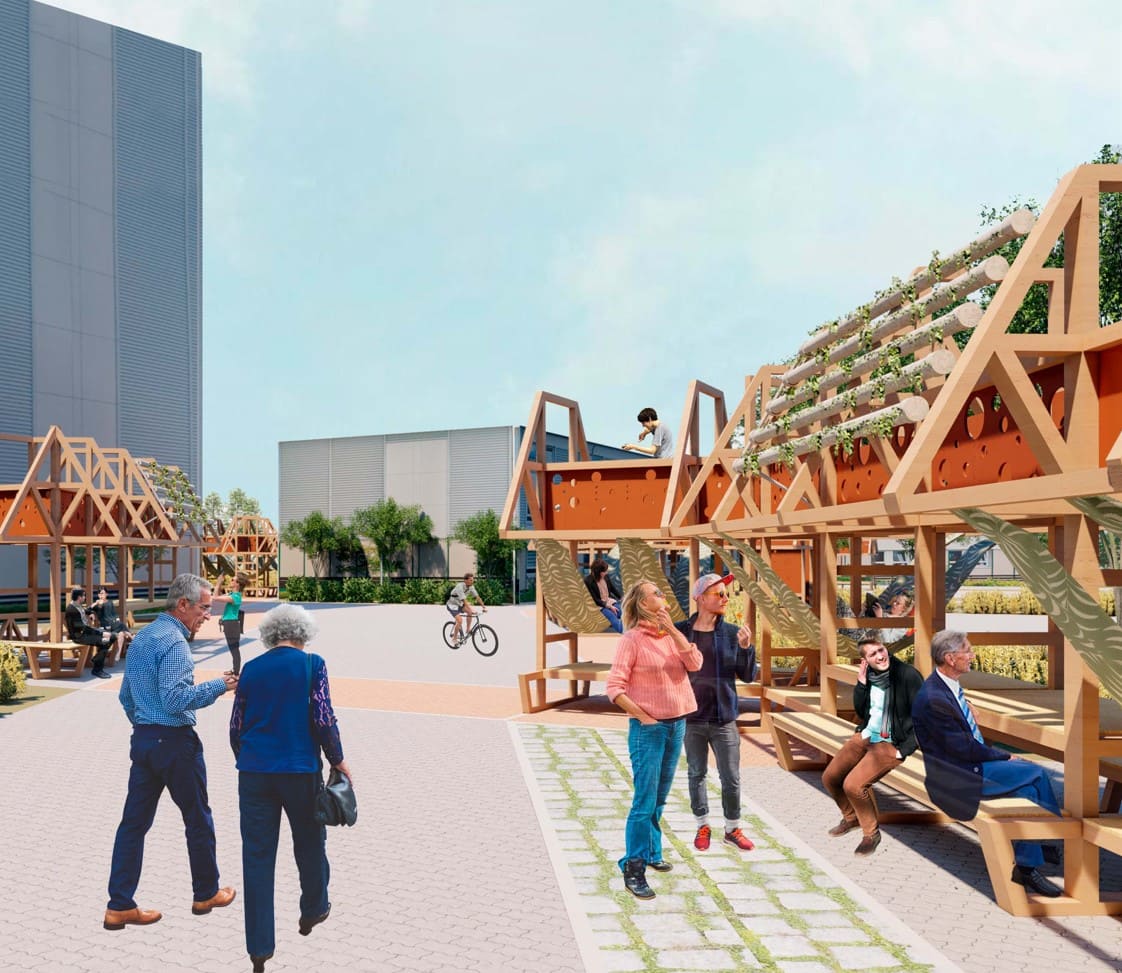
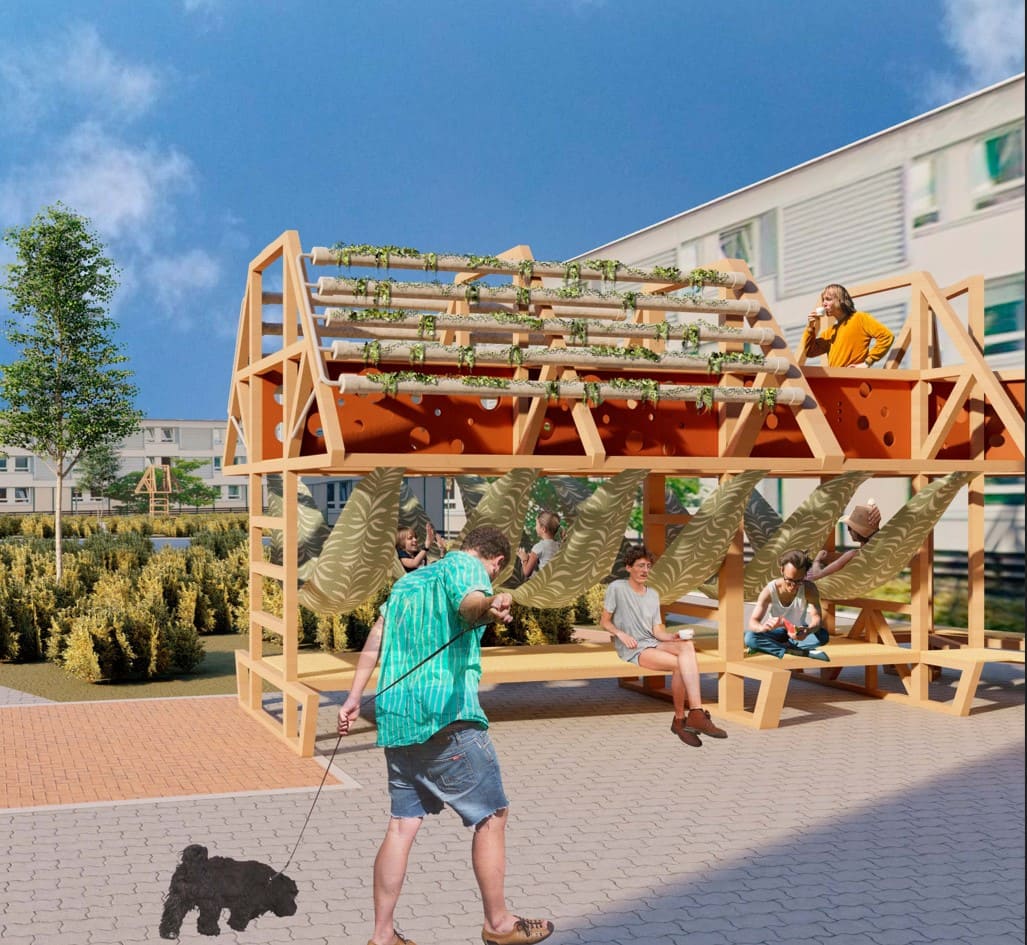
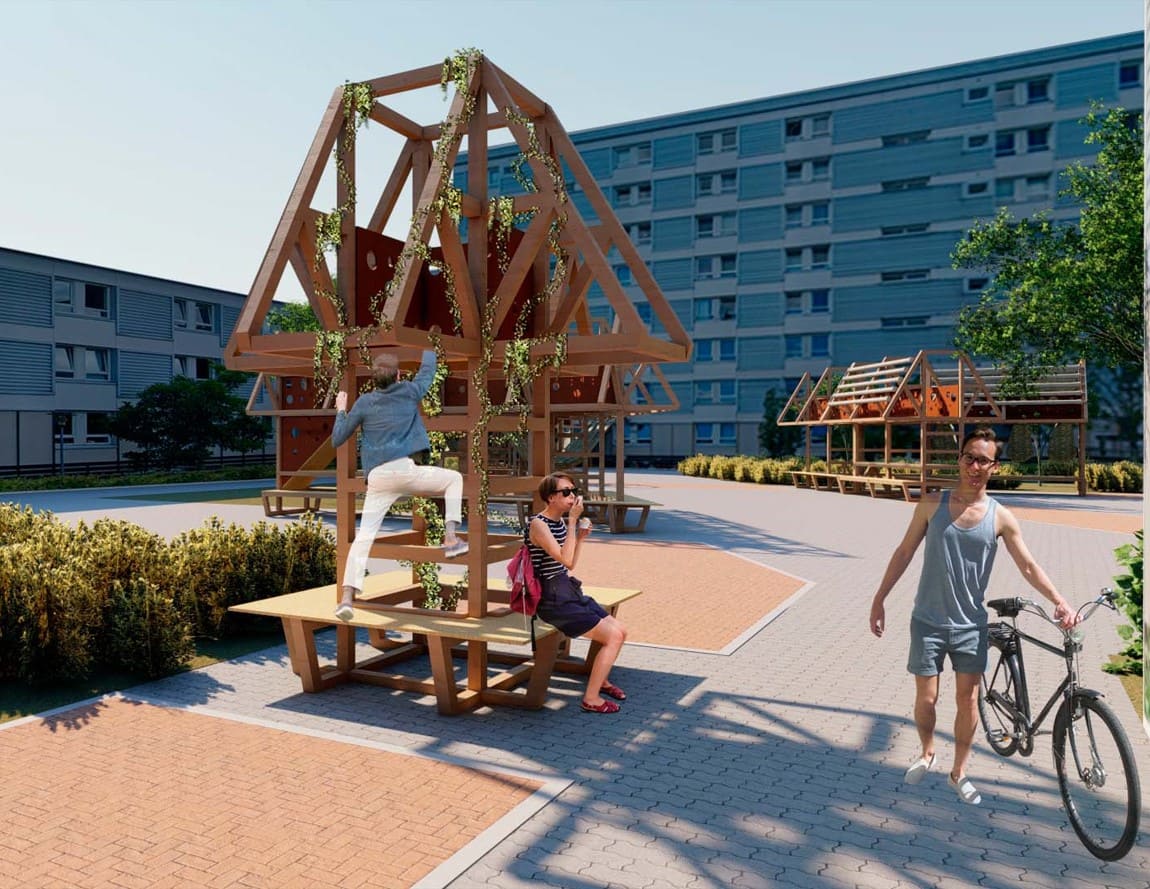
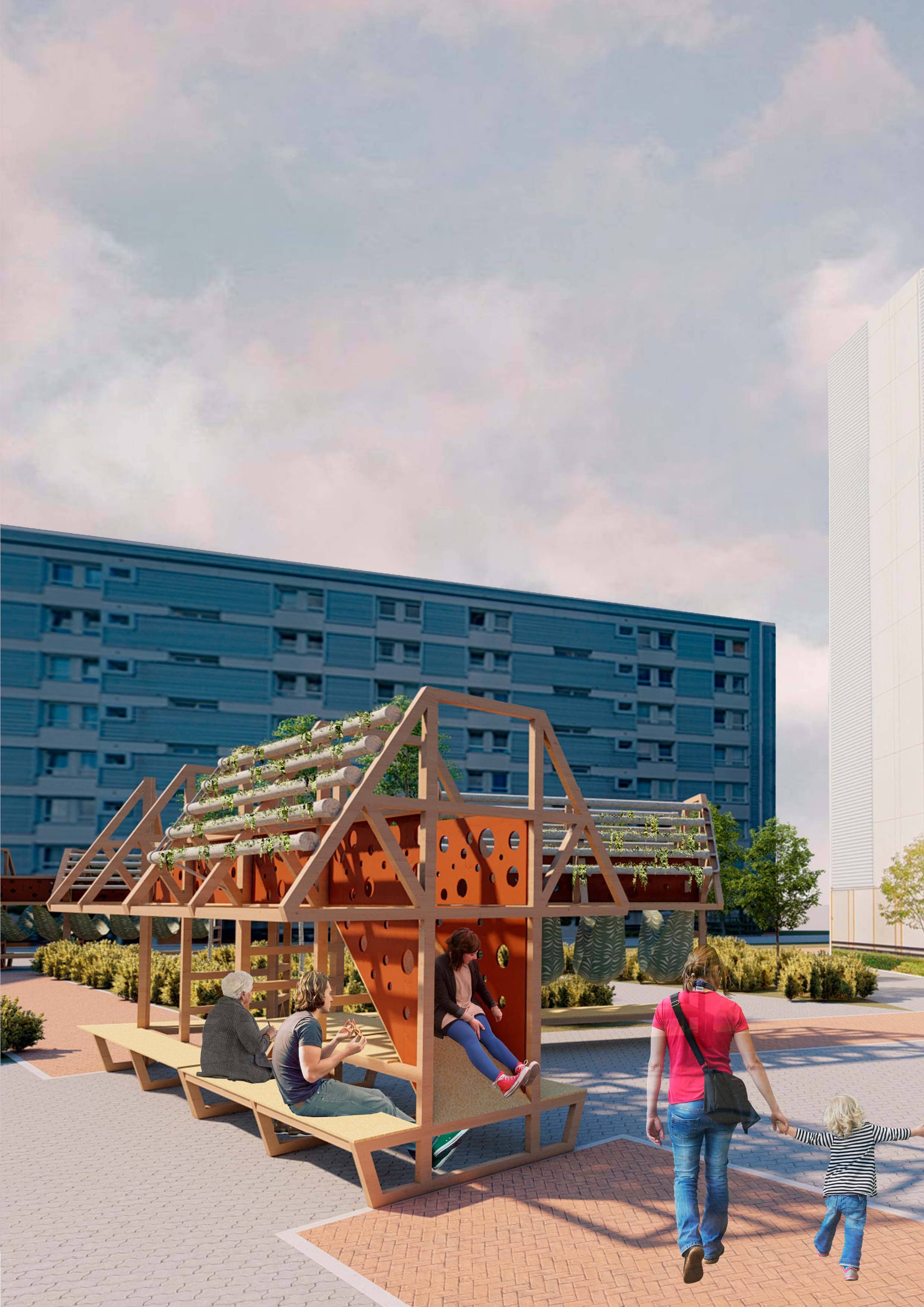
The project focuses on the design of modular urban furniture, specifically wooden scaffold structures, that house different activities and feature hydroponic gardens on the top. To improve efficiency in agricultural production, the use of solar water pumps is incorporated.
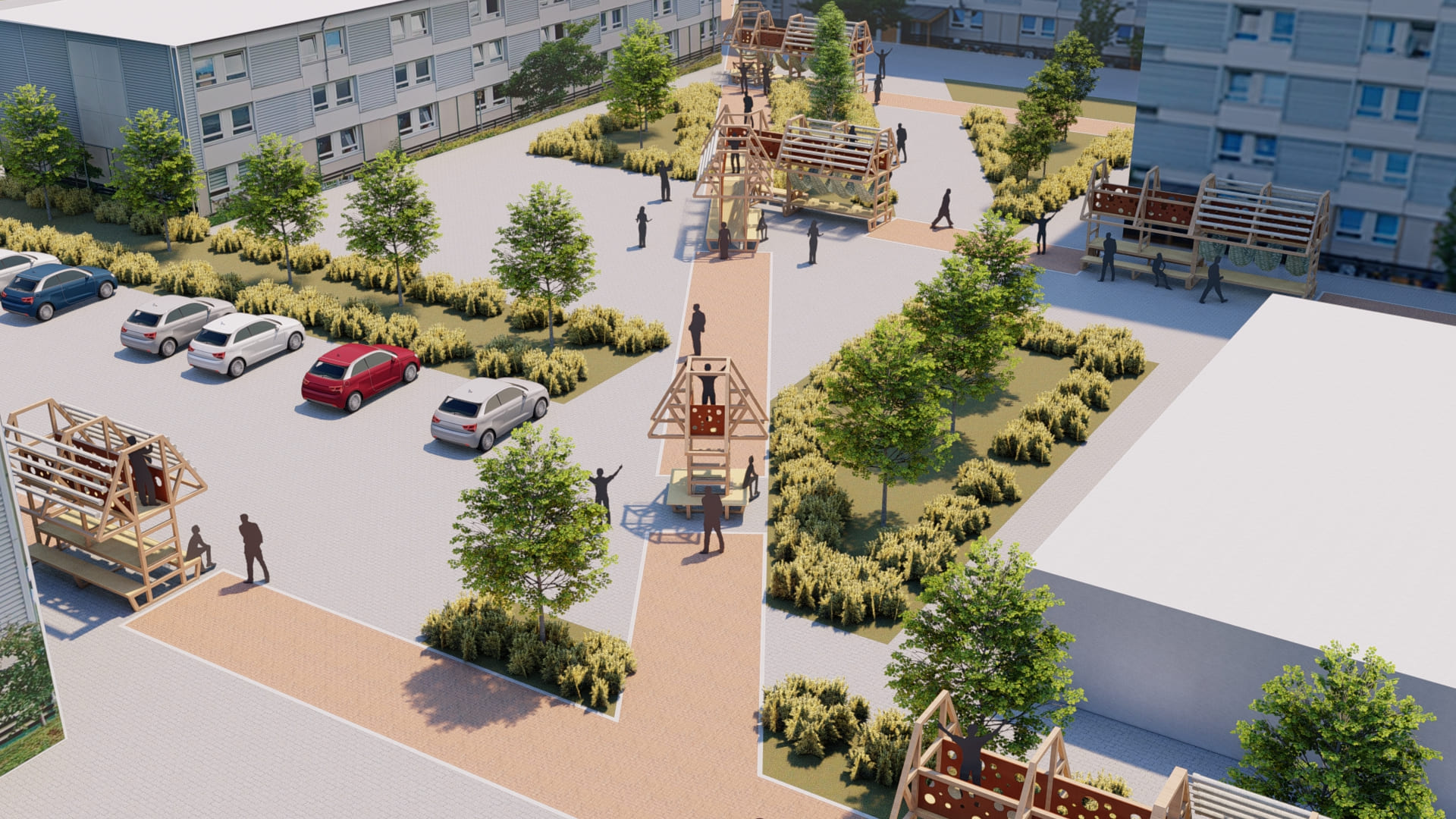
Each module presents variations according to its use, such as resting in hammocks, a place to eat and read outdoors, and a space for gathering and waiting. The upper part serves as a playground for children, while part of the furniture’s coverage incorporates hydroponic gardens with a certain degree of inclination, with the purpose of making the most of urban furniture. Additionally, the furniture incorporates solar water pumps for hydroponics in order to reduce energy consumption and make the system more sustainable.
The modular furniture is strategically located in neighborhoods to form a circuit that allows for interaction among neighbors and the cultivation of food in vertical hydroponic gardens for personal consumption or to share with the local community.
The agricultural activity not only supports families in a socially and environmentally sustainable environment but also helps young people and adults to maintain an active participation in the community, promoting their identity and fostering a sense of social and environmental responsibility in food production. Additionally, the use of solar water pumps contributes to reducing environmental impact and making the project a more sustainable and efficient initiative in food production.